
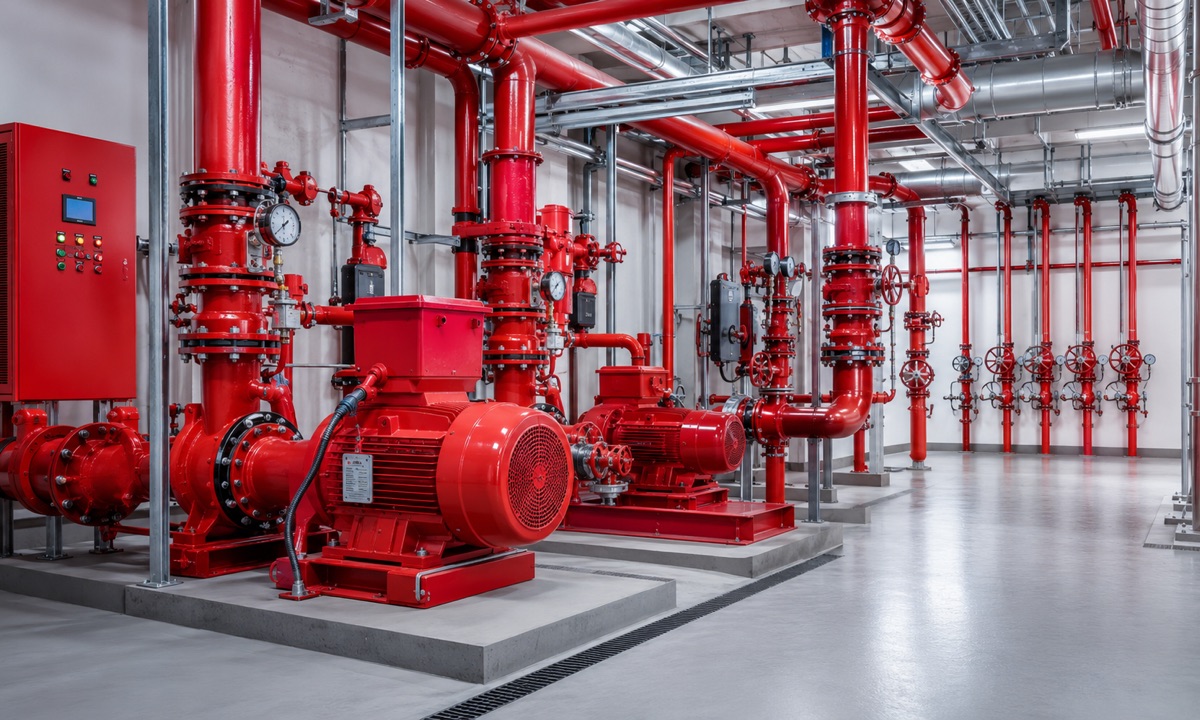
B-ENGINEERING provides firefighting system design, installation, testing, and commissioning in Lebanon, Ivory Coast, and Cameroon, delivering reliable protection for buildings and assets.
A firefighting installation is only as dependable as the process that produced it. Between the first drawing and the final handover, dozens of decisions shape how the system will behave on the worst day of a building’s life. At B-ENGINEERING, we treat firefighting works as a staged engineering process, where each phase has clear technical checks before the next one begins.
Design Stage: Getting the Hydraulics Right
Good fire protection starts with understanding the building. Occupancy type, height, floor areas, storage loads, and the risk level of each zone determine the required water demand and the layout of the network. From there, pipe routes, pump capacity, tank volumes, and pressure reduction points can be defined with confidence.
Design decisions made early are far cheaper than corrections made on site. Reviewing shaft sizes, riser positions, and pump room dimensions before construction advances helps avoid late conflicts with structure, finishes, and other trades.
Site Installation: Precision in Every Joint
During installation, quality depends on discipline. Pipes must be supported at the right intervals, joints made and verified, valves placed where operators can reach them, and equipment fixed with proper clearances. Sprinkler heads, hose reels, and hydrant outlets must land exactly where the design and the architecture intend.
Our teams work alongside the HVAC, electrical, and plumbing crews so that fire pipes share ceilings and shafts without compromising other systems. Regular site checks against approved shop drawings keep the work aligned with the design from the first floor to the last.
Verification: Proving the System Works
Before any firefighting system is accepted, it should be demonstrated, not assumed. Hydrostatic pressure tests confirm the integrity of the pipework. Flushing clears debris that could block sprinklers or damage pumps. Pump performance, automatic start sequences, and alarm signals are then tested against the specified duty.
Results are recorded and shared with consultants and owners, creating a clear technical file that supports inspections and approvals.
Handover and Long-Term Readiness
A system that cannot be maintained will eventually fail. For that reason, we organize valves, pump rooms, and test points for easy access, label key components, and provide the documentation facility teams need for routine inspection and servicing.
Across projects in Lebanon, Ivory Coast, and Cameroon, this structured approach gives clients firefighting systems they can trust and building managers can operate with confidence.
Plan your fire protection with B-ENGINEERING and get a firefighting system engineered, installed, and verified for real emergencies.